Assos

Assos

Assos is a powerful memory where thousands of years of culture, traditions of craftsmanship, and natural life intertwine.

Assos

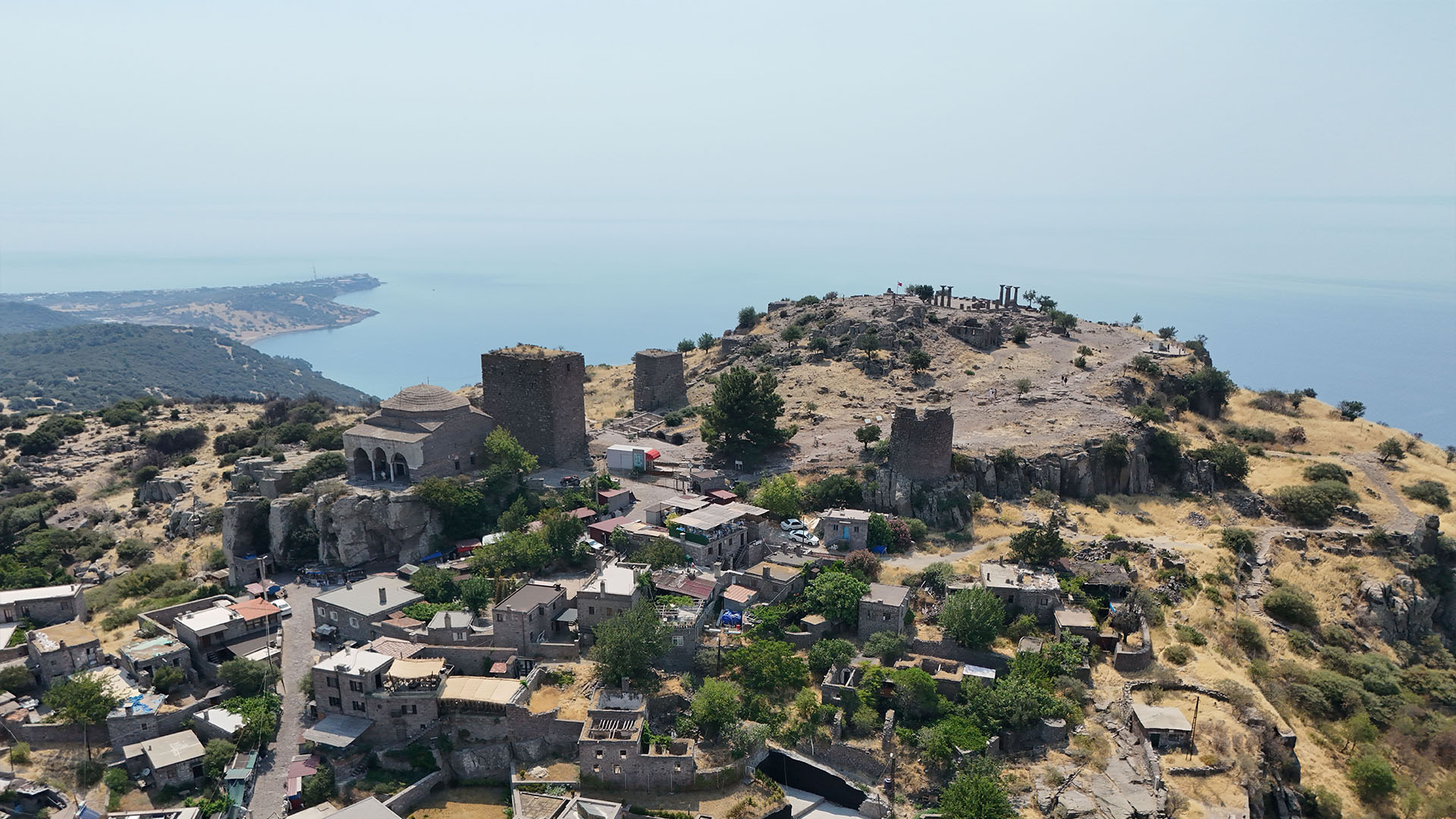
Assos has been one of the centers of production, trade, and maritime connection since ancient times. With its ancient cities, harbor ruins, stone roads, and architectural remains, the region represents not merely a settlement but a layered civilization. Its proximity to Troy further strengthens Assos’s historical significance. This geography forms part of one of Anatolia’s oldest production and trade routes.

Flora, Fauna & Natural Texture

Flora, Fauna & Natural Texture

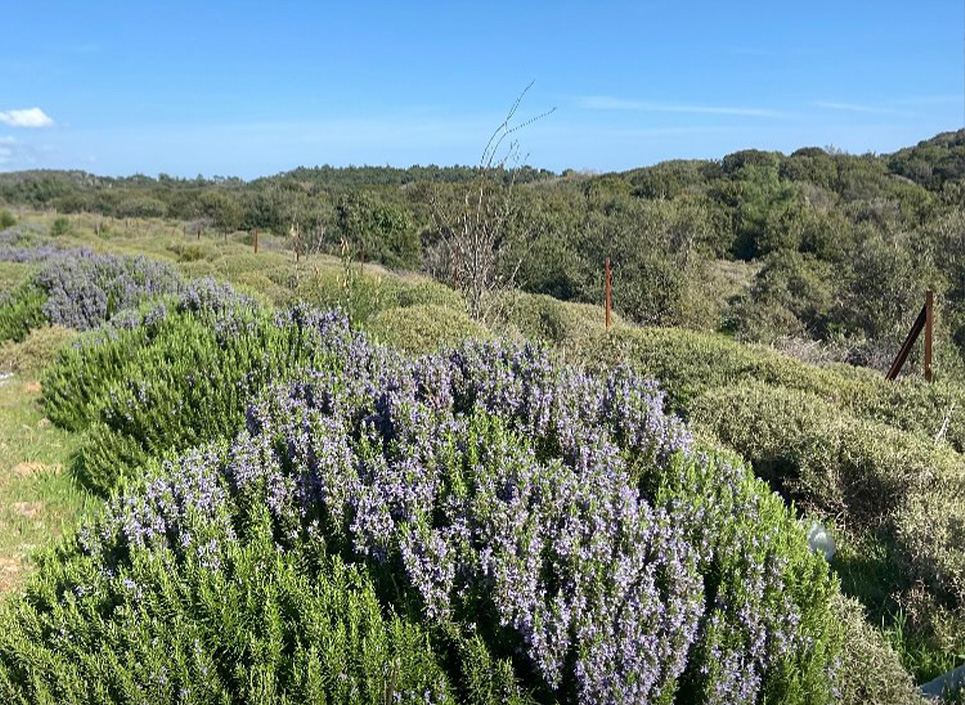
The vegetation of Assos plays a direct role in shaping both its winemaking and culinary culture. Thyme, sage, chaste tree, wild shrubs, oak trees, pine trees, and aromatic herbs form the region’s microclimate and distinctive character. Garrigue formations -composed of plants such as thyme, lavender, sage, and rosemary - create Assos’s natural aromatic identity. These plants do not merely exist in the landscape; they permeate the soil, the air, the winds, and the spirit of production.

Market Culture & Local Life

Market Culture & Local Life

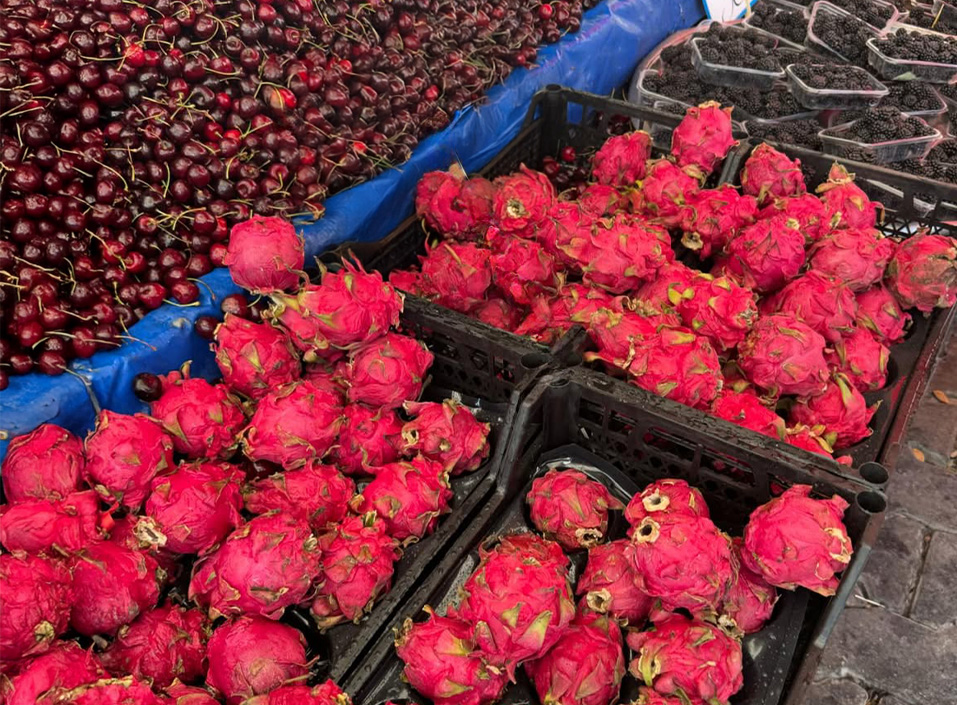
The Assos market is a vibrant space that directly reflects the region’s culture of production. Seasonal produce, local farmers, wild herbs, native plants, and traditional foods are the clearest expressions of the bond between the land and its people. Here, production comes before consumption. Soil, seasonality, and climate remain the true determining forces.

Stone, Color & Texture

Stone, Color & Texture

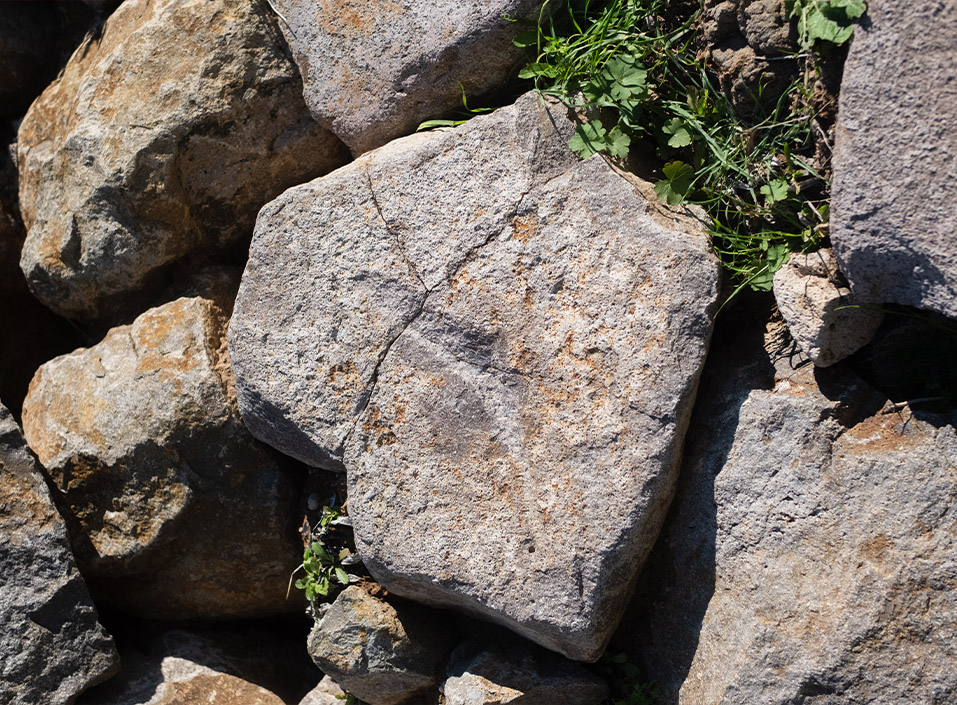
The andesite stone of Assos - known as Assos stone -is one of the defining elements shaping the region’s architecture and overall texture. Combined with shades of purple and lilac, this stone creates a distinctive visual identity unique to the area. Natural stone is not merely an architectural material; it is a physical expression of Assos’s identity.

Ancient Cities, Harbor & Ruins

Ancient Cities, Harbor & Ruins

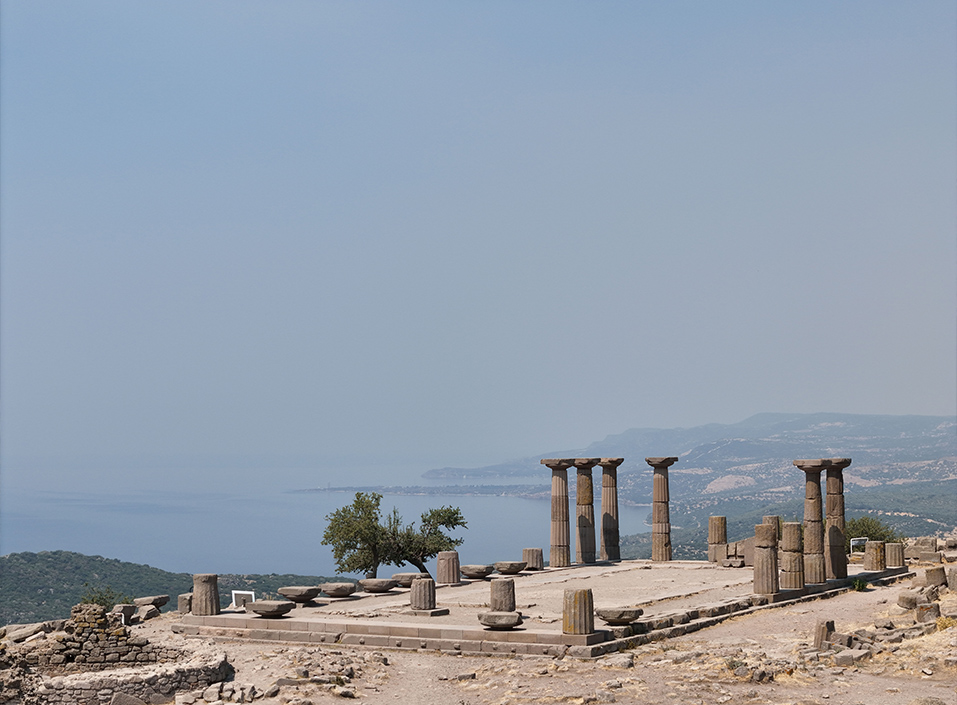
The ancient harbor of Assos stands as one of the strongest symbols of the region’s historic relationship with the sea. Its ruins, structures, and stone textures carry traces of past production, trade, and ways of life into the present. In this geography, history does not remain in the past; it continues to exist as a living part of everyday life.

Traces of Assos: In Wine and in the Kitchen

Traces of Assos: In Wine and in the Kitchen

For V’Asbos, Assos is a point of origin - a foundation for production.

In the wines, the region’s mineral structure, volcanic soils, and natural vegetation are clearly reflected.

In the kitchen, the same geography finds its way onto the plate.

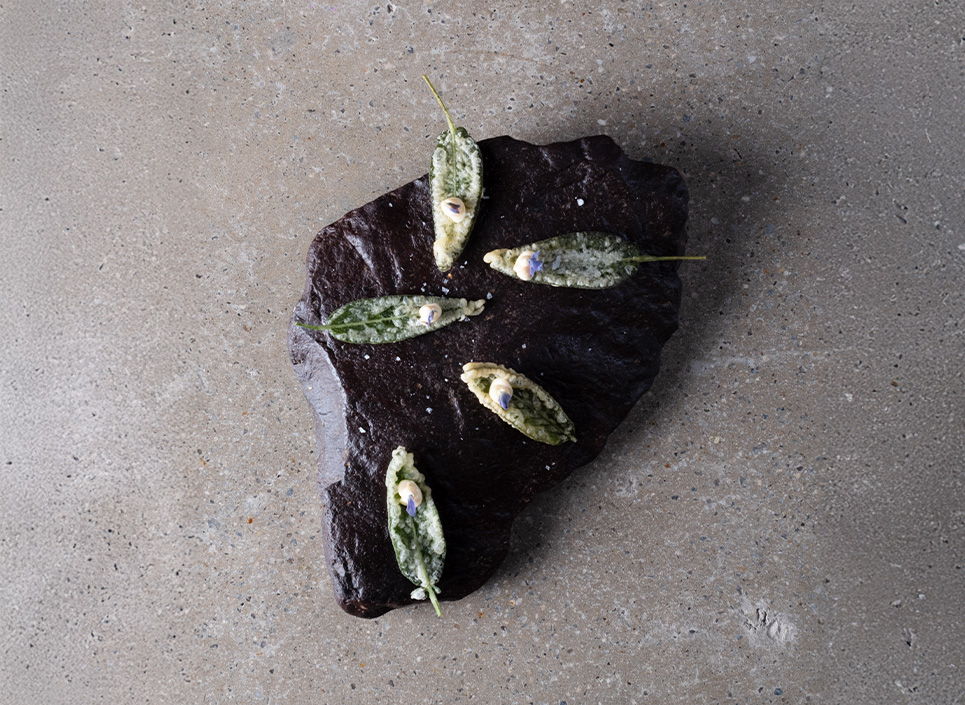
Dishes such as sage tempura are more than recipes; they are stories rooted directly in Assos. Both in the winery and at V’Asbos Kitchen, the traces of this land are consciously preserved.

A Shared Language

A Shared Language

Wine and cuisine are not two separate disciplines At V’Asbos.

They coexist as two interpretations of the same geography - the same soil, the same vegetation, and the same cultural heritage.

The wines carry the traces of Assos. The dishes carry the traces of Assos.

For this reason, production at V’Asbos is not merely about creating a product; it is a way of expressing the geography itself.

Here, Assos is not simply a place being described — it is the common source of every wine produced, every dish prepared, and every table set.